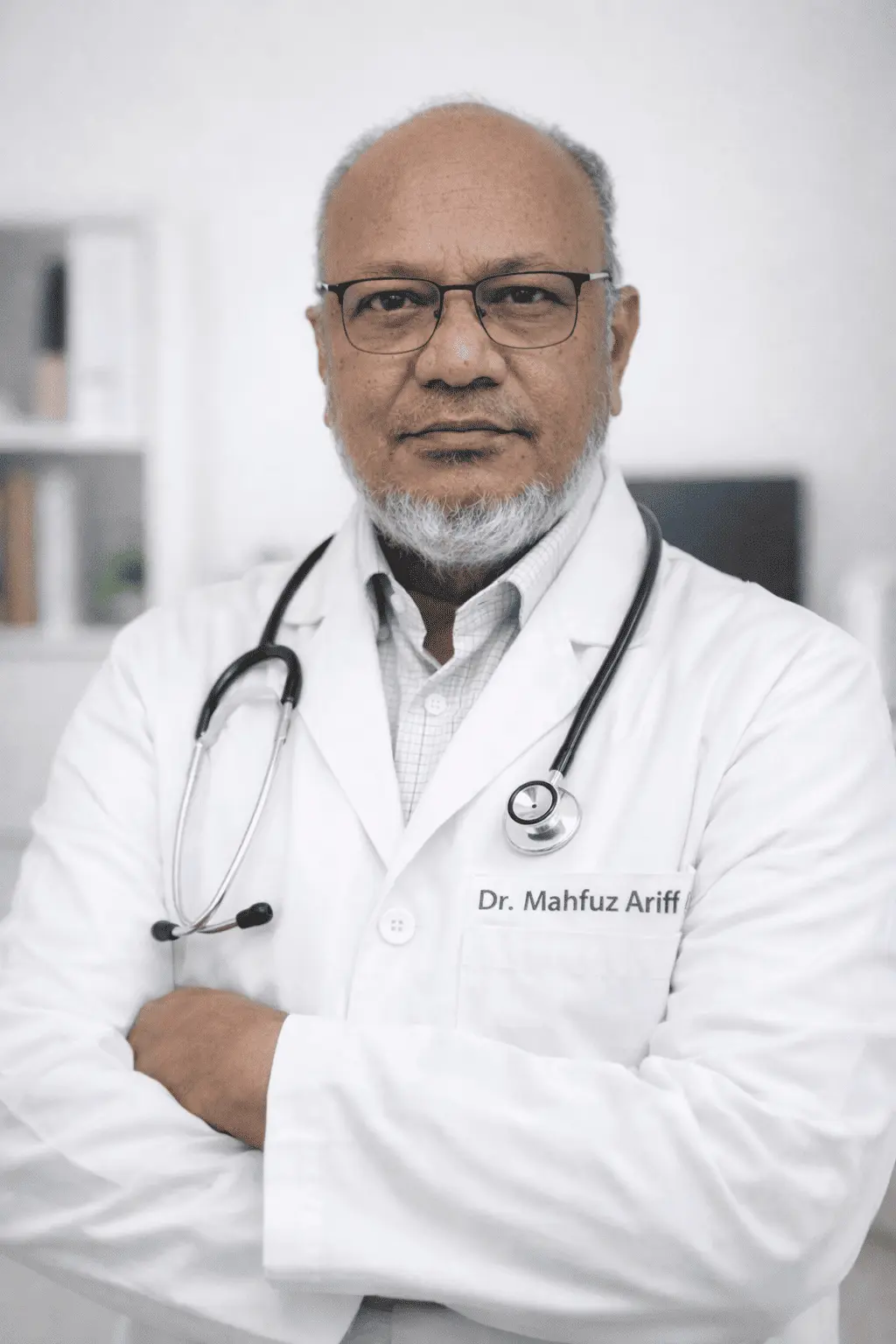
Thoughts & Reflections
Personal perspectives from Dr. M. Ariff on medicine, cancer care, and the patient relationship.
Why I Became an Oncologist
Oncology chose me as much as I chose it. Early in my medical training, I witnessed the profound difference that compassionate, well-guided cancer care could make — not just to survival statistics, but to the texture of a patient's daily life. That realisation never left me.
— Dr. Mahfuz Ariff
My Philosophy of Care
Every patient walks in carrying not just a diagnosis but a story — of fear, hope, family, and resilience. My role is to meet them where they are, explain the science in plain language, and design the safest, most effective path through treatment. Evidence guides the plan; empathy guides the conversation.
— Dr. Mahfuz Ariff
A Note to Fellow Clinicians
Cancer care is most powerful when it is multidisciplinary. I welcome collaboration with surgeons, medical oncologists, pathologists, and palliative care colleagues. If you have a case to discuss or a patient to refer, I am always available for a conversation.
— Dr. Mahfuz Ariff
Research & Clinical Interests
Areas where Dr. M. Ariff is actively contributing to clinical knowledge and patient outcomes.
Featured Articles
Patient education pieces written by Dr. M. Ariff to demystify cancer care.
Understanding Breast Cancer Screening: When, Why, and How
Early detection saves lives. Learn about the different screening methods and when you should start.
Nutrition During Chemotherapy: A Practical Guide
What to eat, what to avoid, and how to maintain strength during your cancer treatment.
Recent Conferences
Where Dr. M. Ariff has been presenting, speaking, and staying at the forefront of oncology.
ESMO Congress 2025
Attended as a Chief GuestPrecision Medicine Access
ICON 2025 (Indian Conference on Oncology)
Attended as a Chief GuestPalliative Care Integration
AROI
Life memberAssociation of Radiotherapist of India
ISMPO
Life MemberINDIAN SOCIETY OF MEDICAL AND PEDIATRIC ONCOLOGY
Medical Disclaimer
This information is for educational purposes only and should not replace professional medical advice. Always consult a qualified oncologist for diagnosis, treatment decisions, and personalised medical guidance.